Category: news

  • Who Is Mike Milan (Cash Flow Mike) and Why Advisors Are Turning to Him for Real Cash Flow Strategy

    Who Is Mike Milan (Cash Flow Mike) and Why Advisors Are Turning to Him for Real Cash Flow Strategy

    Most advisors don’t have a knowledge problem.

    They have a moment problem.

    The moment when a client looks across the table and asks:

    “What do we do next?”

    That’s where confidence breaks down. Not in the report. Not in the numbers. In the decision.

    Mike Milan, known as Cash Flow Mike, built his entire body of work around solving that exact moment.


    The Advisor Behind the Framework

    Mike Milan is a cash flow strategist and the creator of the Clear Path To Cash framework, a system designed to help accountants, bookkeepers, and financial advisors move beyond reporting and into real decision guidance.

    His approach is simple in principle but powerful in execution:

    • Find the real problem
    • Identify what’s causing it
    • Execute a clear next step

    This structure, often referred to as the FIX framework, gives advisors a repeatable way to lead conversations without guessing.

    Because the issue isn’t a lack of data.

    It’s a lack of direction.


    Why Traditional Advisory Falls Short

    Most advisory work today looks complete on the surface.

    Clean reports. Accurate numbers. Professional delivery.

    But when it’s time to act, everything slows down.

    Clients hesitate. Advisors offer multiple options. Nothing moves forward.

    This is what Mike refers to as “almost helpful.”

    Advice that looks right but fails in the moment it matters most.

    The problem isn’t effort.

    The problem is structure.


    The Financial Doctor Approach

    Mike Milan’s work is built around a shift in identity:

    From historian to financial doctor.

    A historian explains what happened.

    A financial doctor diagnoses the issue and prescribes what to do next.

    That shift changes everything.

    Instead of reviewing numbers, advisors begin leading decisions.

    Instead of offering options, they provide direction.

    Instead of ending meetings with uncertainty, they leave with action.


    Real-World Results, Not Theory

    This approach isn’t built in theory.

    It comes from real business experience.

    Mike has built and operated multiple companies and has trained thousands of business owners, bankers, and advisors on how to understand and use financial information in real time.

    Through his work, more than $150 million in hidden cash has been uncovered and over $1 billion in business value has been impacted.

    But the outcome isn’t just better numbers.

    It’s better conversations.


    The Clear Path To Cash

    The Clear Path To Cash system is the foundation behind everything Mike teaches.

    It gives advisors a structured way to:

    • Understand what’s actually happening in a business
    • Focus on what matters most
    • Guide the next decision with confidence

    It’s not about adding more tools.

    It’s about knowing how to use what’s already in front of you.


    Why Advisors Are Paying Attention

    Advisors aren’t looking for more information.

    They’re looking for clarity.

    They want to walk into meetings without hesitation.

    They want to stop saying “let me get back to you.”

    They want to be the advisor their clients trust when it matters most.

    That’s why Mike Milan’s work is gaining attention.

    Because it doesn’t promise more noise.

    It delivers better conversations and better outcomes.


    Final Thought

    The most important moment in advisory doesn’t happen when the report is finished.

    It happens right after.

    When the client asks:

    “What should we do next?”

    That moment… we know it.
    Clear Path To Cash was built for that moment.
  • How I Stopped Chasing Receivables: A Practical Playbook for Cash Flow Management

    How I Stopped Chasing Receivables: A Practical Playbook for Cash Flow Management

    How I Stopped Chasing Receivables: A Practical Playbook for Cash Flow Management

    Three years ago I sat across from a business owner who had just pulled their cash forecast from a spreadsheet full of colored cells and wishful thinking. The forecast looked optimistic. The bank balance did not. The owner asked me the question most of them do: "Why are we always one month behind?"

    Cash flow management is not mysterious. It is a sequence of choices you make every week and every month. The problem I keep seeing is not that owners misunderstand their numbers. It is that teams treat cash as a passive outcome instead of an operational priority. I learned this the hard way and rebuilt a playbook that advisors can use right away.

    Frame the problem: cash as an operational rhythm, not a report

    Most firms treat cash flow as a report you read once a month. That creates a lag between insight and action. When receivables slip or payables compress, teams scramble. Decisions become reactive and expensive.

    Reframe cash flow management as an operational rhythm. That means weekly checkpoints, accountable owners, and pre-planned actions for common scenarios. When your client conversations use this rhythm, they move from vague concern to concrete leverage.

    Set three weekly rituals that change behavior

    The fastest wins come from simple, repeatable routines. I recommend three rituals: the Collections Stand-up, the Commitment Review, and the Short-Term Forecast update.

    Collections Stand-up

    Hold a 15-minute stand-up twice a week focused only on receivables aged 0–60 days. Assign each open item to a specific person and a target date for contact. Track only two things: who will contact the customer and what the single next step is.

    This ritual reduces friction. One owner knows the plan. The rest of the team stops guessing. Over 12 weeks, the firms I work with shorten average days sales outstanding by two weeks.

    Commitment Review

    Once a week, the leadership team reviews any supplier payments, payroll decisions, or capital commitments scheduled in the next 30 days. The goal is not to micromanage every invoice. The goal is to flag decisions that change the cash runway by more than a week.

    When I introduced this, leaders stopped approving non-essential vendor upgrades in busy months. Those small approvals had been quietly draining working capital.

    Short-Term Forecast update

    Update a rolling 13-week cash forecast every Friday. Keep it deliberately narrow. Capture only cash receipts, payroll, essential vendor payments, and any one-off timing events. If your client uses automated billing, reconcile projected receipts with actual collections weekly.

    A tight 13-week forecast acts like a thermostat. It tells you when to cool spending or when to accelerate collections. When it is visible to the whole team, it aligns behavior fast.

    Design payment terms and enforcement that preserve relationships

    Many owners avoid firm enforcement because they fear damaging client relationships. I teach them a three-step approach that keeps relationships intact while protecting cash.

    First, standardize terms. Publish them in proposals and invoices. Make expectations clear before the work begins. Second, automate early reminders and add a human follow-up before the invoice becomes seriously overdue. Automation handles the routine nudges; humans handle the exceptions. Third, create simple escalation rules: friendly call at 14 days late, payment plan offered at 30 days, and onboarding hold at 60 days.

    These rules reduce ambiguity. Clients respond better when your process is predictable and kind. You preserve the relationship and improve your cash.

    Turn conversations into decision moments with clients

    Advisors and accountants rarely coach owners on operational cash choices. Instead they present numbers. Change the conversation by turning reports into decision frames.

    When you review a forecast, ask one diagnostic question: "Which action this week moves the cash needle materially?" Offer two realistic options and the trade-offs for each. For example: accelerate two invoices by offering a 1.5% discount, or delay a discretionary supplier payment until the next period. Lay out the impact on the 13-week runway in dollars.

    This approach makes meetings practical. Owners prefer concrete options over abstract warnings. It also makes your advice operational, which increases client trust and reduces future crises.

    Build simple rules for scaling the engine

    Operational improvements stall when they depend on a single person. Create simple rules that scale.

    Create an owner for cash flow operations. This person owns the weekly rituals, maintains the 13-week forecast, and escalates exceptions. Second, document three decision templates: a collections script, a payment plan agreement, and a vendor deferral request. These templates remove hesitation when a quick decision matters.

    Finally, embed a feedback loop. At month end, run a short review: what variances occurred, which actions changed the outcome, and what you will change next month. Small adjustments compound quickly.

    Where advisors can add immediate value

    You do not need complex tools to start. The most helpful interventions are process design and disciplined follow-through. Sit down with the business owner for one hour and build the three rituals together. Draft the collections script and run the first three stand-ups with them. Put the 13-week forecast in a shared file and review it together for four weeks.

    If you want a short primer on practical leadership habits that help run these rhythms, I recommend a concise reference that explains how to move from strategy to repeated practice. For a clear primer on improving cash flow specifically through collection and forecasting discipline, place the 13-week forecast at the center of your client work.

    Closing insight: cash management is a habit, not a spreadsheet

    Cash is not a number you check once a month. It is an operational habit you build into weekly work. When advisors reframe cash flow management as routines, decision templates, and accountable owners, they turn reactive crises into predictable outcomes.

    Start by running one 15-minute Collections Stand-up next week. Keep it to three items. Watch how quickly the rhythm changes behavior. That single change often delivers more relief than a multi-page report.

    When you leave your next client meeting, aim for one concrete decision that moves the cash needle in the next seven days. That is where value lives.

  • How Clear Cash Flow Conversations Prevent Crisis: A Real-World Playbook for Advisors

    How Clear Cash Flow Conversations Prevent Crisis: A Real-World Playbook for Advisors

    How Clear Cash Flow Conversations Prevent Crisis: A Real-World Playbook for Advisors

    I remember the phone call at 8:12 a.m. from a client who ran a small manufacturing shop. A late receivable and an unexpected parts order had pushed his bank balance into the red. He was close to shutting down a production line by noon. We avoided that outcome in under three hours—because we had practiced cash flow conversations months earlier.

    This article teaches a repeatable approach you can use with advisory clients to surface risk earlier, make better decisions faster, and move from firefighting to steady stewardship. The primary skill is not fancy software. It is how you structure and run cash flow conversations so business owners act before problems are urgent.

    Frame the problem: what a useful cash flow conversation looks like

    A cash flow conversation focuses on the next 60–90 days and answers two questions: will the business meet its obligations, and what are the options if a shortfall appears? That clarity keeps owners from fantasizing about revenue that is not yet banked and from ignoring the cost side until payroll is at risk.

    Begin each meeting with three simple statements: the current bank balance, expected inflows in the period, and committed outflows. Those statements anchor the rest of the discussion. When owners hear one clean projection instead of a dozen possibilities, they make smarter trade-offs.

    Build a preparation ritual advisors can rely on

    Good conversations require good inputs. Create a short pre-meeting checklist the owner can complete in 10 minutes. Ask for recent bank balance, three largest expected receivables and their payment likelihood, three vendor commitments, and any one-off spends expected in the period.

    Use this checklist routinely. Over time it trains owners to think in time horizons and probabilities. It also reduces the meeting to strategy—where to shift dates or reassign resources—rather than data discovery.

    Tools and cadence that make this practical

    You do not need enterprise software to have high-quality cash flow conversations. A shared spreadsheet with rolling 13-week columns works fine if it is disciplined. The key is cadence: short weekly check-ins and a deeper monthly review change behavior faster than quarterly pressure.

    Set weekly 20-minute check-ins that use the checklist results. Reserve the monthly meeting for scenario planning. If clients want a self-directed learning resource on how to frame decisions and responsibility inside the business, point them to practical reads on leadership.

    Run scenario-based conversations, not just projections

    Numbers alone do not move people. Scenarios do. In every cash flow conversation outline three possible pictures for the next 60 days: best case, base case, and contingency. Tie each scenario to a short list of actions and timelines.

    For example, the manufacturer’s base case assumed two invoices paid on time. The contingency model showed what happened if one invoice slipped by 30 days. That single scenario led to two options: negotiate a 15-day vendor extension or accelerate one receivable with a small fee. The owner picked the vendor extension because it cost less and preserved customer relations.

    Make the conversation operational: decision rules and ownership

    Convert conversation outcomes into explicit decision rules. Rules remove ambiguity in a crisis. Examples of tight, useful rules:

    • If projected rolling cash drops below two weeks of payroll, delay non-essential purchases and pull the October invoice schedule forward for collection.
    • If a receivable is more than 15 days late and over $10,000, assign it to the owner for personal follow-up within 48 hours.

    Assign one owner for each rule and put the rule into a follow-up column in your shared file. When people know who is accountable and what threshold triggers action, conversations turn into reliable operational responses.

    Where advisors add most value

    Advisors add value by translating cash projections into negotiation and timing decisions. That includes helping clients spot flexible cash levers: payment terms, inventory timing, short-term financing alternatives, and temporary staffing shifts.

    When you teach owners to map each cash lever to the likely cost and execution time, decisions become easier. For example, offering a 1.5% discount to accelerate a $50,000 receivable may cost less than a short-term loan’s interest and fees. Helping a client run that math quickly is a high-value advisory moment.

    Measure what matters and keep the discipline

    Track three signal metrics each week: bank balance weeks of runway, receivables over 30 days, and committed one-off outlays. Don’t overload the dashboard. Advisors and owners need clear signals that change behavior.

    If you want a practical primer to help clients think differently about working capital and timing, use pragmatic resources on cash flow that explain simple, repeatable frameworks. These resources should supplement your advice, not replace the relationship.

    Close the loop: short follow-ups and learning

    End every meeting with two short commitments: one action to reduce risk and one action to improve the next projection. Document both in the shared file and confirm who will report back at the next check-in.

    After six months, review the decisions and outcomes. Which rules triggered? Which levers worked? That retrospective builds a client’s confidence and your credibility.

    Final insight: conversations shape outcomes more than tools

    I have seen identical companies with very different outcomes simply because one met weekly to run a three-scenario cash check and the other did not. The tech and templates matter, but they only matter if the conversation happens regularly and with clear ownership.

    If you are advising multiple small businesses, embed this ritual into your offering. Teach the pre-meeting checklist, run short weekly check-ins, use three scenarios, and convert choices into decision rules. Your clients will stop treating cash flow as an emergency and start treating it as a management discipline.

    When you leave meetings with a clear runway number and two named actions, you change the odds for every owner you advise.

  • When Cash Flow Goes Quiet: How Advisors Rescue a Two-Week Survival Crisis

    When Cash Flow Goes Quiet: How Advisors Rescue a Two-Week Survival Crisis

    When Cash Flow Goes Quiet: How Advisors Rescue a Two-Week Survival Crisis

    The client called at 8:12 a.m. on a Tuesday. Their payroll cleared, credit cards hit their limit, and three major invoices sat unpaid. They had revenue this month, but cash flow had vanished between the bank balance and the bills. The owner was two weeks away from missing payroll.

    This is a common scene for small businesses. As client advisory providers, accountants, bookkeepers, and business coaches we see the same failure points. The lesson is simple and urgent: cash flow is a rhythm, not a number. When that rhythm stutters, you need a predictable process to diagnose the problem and restore breathing room.

    Diagnose the rhythm: fast triage that prevents panic

    Start by stabilizing information. Ask for the bank feed, an aged receivables report, and the next 30 days of payables. Time matters. You need to know when large disbursements and deposits hit.

    Look for three common mismatches. First, timing gaps where invoices pay late while recurring expenses are fixed. Second, one-off cash drains like unexpected equipment repairs. Third, revenue recognition that looks good on paper but does not convert to bank deposits for weeks.

    Clients often expect the balance sheet to tell the story. It does not. The cash flow statement and real-time bank activity reveal the rhythm. Use what you find to set the owner’s expectations and buy time to act.

    Quick tactical moves that restore breathing room

    When the diagnosis shows a two-week shortfall, apply moves that take effect in days, not months. That sequence works because owners need visible wins to keep stress from driving poor decisions.

    First, prioritize payments. Move payroll and critical supplier obligations to the top. Communicate honestly with vendors and offer short, realistic payment plans. Most vendors prefer a plan over silence.

    Second, accelerate receivables. Offer small, temporary discounts for early payment on large invoices. Switch invoice delivery from email attachments to direct payment links and automated reminders. For repeat clients, suggest short-term retainers that convert to immediate deposits.

    Third, create a temporary cash buffer. That might mean converting an unused credit line into working capital for 30 days or asking the owner to defer owner distributions. The buffer reduces the chance that a single late payment becomes a payroll failure.

    These moves fix the immediate exposure. They also reveal whether the problem is structural or episodic.

    Fix the structure: systems that prevent the next crisis

    Once the immediate threat passes, you must change behavior. Stabilizing cash flow on a recurring basis requires four systems: forecasting, collection, payment cadence, and visibility.

    Forecasting should not be a quarterly spreadsheet that gathers dust. Owners need a rolling 13-week cash forecast that updates weekly. Forecasting forces decisions: when to hire, when to buy equipment, and when to accept large orders that strain operations.

    Collections need rules. Standardize invoice terms and enforce them. Automate reminders and measure days sales outstanding. If a client regularly pays late, price that risk into future contracts.

    Payment cadence demands alignment. Match supplier terms to your client’s revenue cycle. If customers take 45 days to pay, negotiate 45-day terms with suppliers where possible. Small shifts in cadence remove repeated timing mismatches.

    Visibility means dashboards that show cash positions, not just profit. Owners make better choices when they see the coming 30 and 90 days of cash activity. You can build those dashboards in the accounting system or a lightweight spreadsheet.

    These systems reduce surprises. They also let you have higher-quality conversations about growth and investment.

    Reframe advisory conversations: cash flow as a leadership tool

    Advisory work succeeds when you reframe technical problems as leadership decisions. Cash flow conversations surface priorities. They force owners to choose between growth, profitability, and resilience.

    Lead those conversations with scenarios. Present a base case that assumes current billing and collection performance. Then show a conservative case with slower receipts. Finally show an optimistic case where collections improve by 10 percent. That trio turns anxiety into a set of manageable outcomes.

    When you coach an owner through these choices, you practice leadership and financial clarity at the same time. Good leaders choose trade-offs early and own them. Your advisory role is to make those trade-offs clear and to document the commitments.

    Mid-article resource and final insight

    When cash pressure is acute, practical tools and straightforward language matter. Point owners to resources that help them negotiate terms, draft short payment plans, and set up a rolling forecast. Small, consistent actions beat grand plans that never get executed.

    Cash flow is not a one-off fix. It is a management discipline that becomes a competitive advantage. The clients who survive shocks do three things well: they prepare for timing mismatches, they respond with calm urgency, and they learn from each event to harden their operations.

    If you can help a client establish a predictable cash rhythm, you change the decision set they face. They make smarter hires. They accept projects that fit their capacity. They sleep better. For hands-on resources that reinforce this approach and provide practical tactics, consider materials that focus on improving cash flow.

    Act before the next payroll. Build the rhythm into the month. Regular forecasting, strict collections, and aligned payables turn a two-week crisis into merely an event you anticipate and manage. That is the practical value your clients need from you today.

  • Cash flow forecasting that saves months of firefighting: a field guide for advisors

    Cash flow forecasting that saves months of firefighting: a field guide for advisors

    Cash flow forecasting that saves months of firefighting: a field guide for advisors

    When a midsize services firm called me in panic, they had 14 days of runway and four payrolls ahead. The owner had invoices piling, a seasonal contract renewal slipping, and no clear view of what to prioritize. We rebuilt one simple spreadsheet and changed the conversation from urgent to manageable. That first 100 days of focused cash flow forecasting turned the owner from reactive to strategic.

    This piece walks you through practical, repeatable steps advisors and accountants can use to help clients stop living month-to-month. The goal: avoid surprise shortfalls and give owners time to make the right decisions.

    Why cash flow forecasting is the advisory lever most firms underuse

    Profit and loss tells a history. Cash flow forecasting tells the future. Many advisors run margin analysis and tax planning but skip a forward-looking, rolling forecast that links invoicing, receivables behavior, and timing of expenses.

    Without a forecast, clients make decisions from a place of fear. With one, they choose from options. As a result, you reduce emergency finance requests and make your advisory work proportionally more strategic.

    Build the smallest useful forecast and iterate

    Start with a one-page model the owner will actually update. Include three rows: cash in by date, cash out by date, and the daily or weekly running balance. Keep horizons short at first: 13 weeks for most small businesses, 26 weeks for seasonal operations.

    Ask two surgical questions when you set it up. First, what predictable receipts can we schedule? Second, which outflows are fixed vs discretionary? That split clarifies where to apply timing levers.

    Use conservative timing for receivables: shift invoice dates by the client’s historic DSO (days sales outstanding) plus a buffer until you establish a new pattern. This small habit prevents overly optimistic projections.

    Turn the forecast into a disciplined client conversation

    Make the forecast the agenda. At the start of the month, present three scenarios: baseline, downside (10-20% revenue slip), and upside (best-case). Use the baseline as your working plan and keep the downside ready.

    When the forecast shows a gap, frame choices clearly. Options include accelerating receivables, deferring discretionary spend, staging hiring, or negotiating short-term trade terms. Always attach outcomes to timing: what happens in 7 days, 21 days, and 90 days.

    These structured options stop nebulous pleas for help and make the discussion tactical. As you coach clients through the decision tree, they stop asking for answers and start choosing among well-defined options.

    Practical controls that buy time and reduce risk

    Introduce three controls that scale across clients. First, weekly receivables triage. Assign one owner to chase the top 10% of overdue dollars each week. This concentrates effort where it moves the balance.

    Second, a payment-priority protocol. Not all bills are equal. Payroll, rent, and critical supplier payments get top priority. Map payments to the forecast so an owner sees which obligations will clear and which will require intervention.

    Third, a small-line contingency. A committed but rarely used short-term facility or an overdraft alternative can be a bridge when timing mismatches occur. Structuring that line in calm times gives owners breathing room without normalizing reliance on it.

    These controls focus attention and reduce the number of last-minute panics you face as an advisor.

    Operational habits that stick

    Make updating the forecast a routine, not a project. Require five-minute weekly check-ins where the owner or finance lead confirms receipts and immediate obligations. Over time the weekly update becomes the firm’s rhythm and the forecast gains accuracy.

    Automate the low-effort parts. Pull bank balances and recurring payments into the forecast to avoid manual errors. Keep manual judgment where it matters: contract timing, one-off disputes, and payroll changes.

    Also coach owners on simple invoice design and payment terms. Clear due dates, a statement of late fees, and one clear point of contact reduce friction and shorten collection cycles. Those operational moves improve the forecast by changing the underlying data.

    How advisors embed this into recurring services

    Package the forecast as a regular advisory touchpoint. Use it to structure monthly strategy conversations and to prioritize tax planning, hiring, or capital investments. When you link operations and strategy through a living forecast, recommendations become easier to accept.

    Leadership matters here. Encourage business owners to own the numbers and the decisions. If you want behavior change, stop doing the work for them and instead design the meeting and dashboard that make ownership inevitable. For practical frameworks on how leaders make the shift from doer to planner, see leadership.

    Midway through the engagement, introduce a cash buffer target tied to operating days. The buffer becomes the simple north star: X days of operating cash. When owners can say whether they have the buffer, decisions stop being emotional and become mechanical. When clients ask how to increase runway quickly, focus on three levers in order: accelerate receivables, reduce discretionary spend, and adjust timing of payables. For a helpful resource on structuring short-term cash strategies, consider this framing around cash flow.

    Closing insight: predictable processes beat episodic heroics

    Most businesses do not fail because they lack customers. They fail because they run out of cash while waiting on customers. Your role as an advisor is to make that waiting visible and manageable. A simple, disciplined forecast paired with weekly habits and a small set of controls turns panic into planning.

    Teach clients to update the forecast, choose among clear options, and stick to a buffer goal. The outcome is practical. You reduce surprise, strengthen client trust, and create room for the strategic work that grows the business. When you hand an owner a rolling forecast and the discipline to use it, you change their decision-making for good.

  • Cash flow management that saves a business: a field-tested playbook

    Cash flow management that saves a business: a field-tested playbook

    Cash flow management that saves a business: a field-tested playbook

    Three years ago a mid-size manufacturer called me at 5 p.m. on a Friday. They had a full order book, machines humming, and a bank balance that read like a punch-drunk boxer. Payroll was due Monday. That sentence — profitable business, negative liquidity — is where good owners and good advisers get tested. Cash flow management is not a spreadsheet exercise. It is a series of practical choices you and your clients make every week.

    Why cash flow management fails in healthy-looking businesses

    Problems show up in three places: timing, assumptions, and conversations. Timing errors happen when accounts receivable and payables move in opposite directions. Assumptions break when a budget reflects idealized sales rather than contract realities. Conversations fail when advisers accept optimistic phrases like “we’ll collect in a few weeks” without anchoring them to dates and consequences.

    The firm that called me had all three. They counted an incoming large invoice as cash-in-hand, even though their client paid on a 60-day cycle. They had suppliers demanding fortnightly prepayments. And their leadership kept saying “we’ll bridge it.” That vague certainty almost cost them the business.

    Diagnose the problem quickly with three simple checkpoints

    First, run a 13-week rolling forecast, not an annual budget. A 13-week view forces decisions on timing. Use real invoice dates and known payment terms. If a client usually pays on day 45, model day 45, not day 30.

    Second, tag risk on every receivable. Assign each line ‘confirmed’, ‘at-risk’, or ‘delayed’ and attach a collection date. Revisit those tags twice weekly until the risk clears.

    Third, map fixed versus variable outflows. Payroll and rent are fixed. Materials and one-off contract costs are variable. When you know which costs you can move, you can buy time.

    These checkpoints expose the true gap between cash needs and cash available. They also create a disciplined narrative you can use in conversations with owners, lenders, and suppliers.

    Operational moves that free cash in 30 days

    Start with procurement. Negotiate single-line extensions first. Ask suppliers for one concession: move the largest single SKU to net-60 while keeping others at standard terms. That one change often buys enough runway to normalize collections.

    Tighten receivables by changing how invoices are delivered. Email invoices with a clear due date and a one-line explanation of what triggers late penalties. When necessary, convert slow-pay clients to milestone billing. Milestones change the psychology of payment because each deliverable becomes a mini-contract with its own cash event.

    Use short-term leverage wisely. A single invoice-financing line or a short vendor credit can be cheaper than emergency late fees and the reputational cost of missed payroll. Model the interest and fees against avoided costs and pick the least costly path.

    If a client faces seasonal swings, build a small reserve during peak months. Even setting aside a fraction of gross margin creates a buffer that prevents reactive decisions when the off-season hits.

    Better client conversations: structure, not platitudes

    Shift conversations from optimism to outcomes. Replace “we’ll collect” with “client X has paid on day 45 historically; we will request partial payment of 30% by May 10 and the balance on June 1.” Put dates in writing and follow up with a calendar invite for a reminder.

    Use three scripts with owners: the reframe, the contingency, and the commitment. The reframe states the facts. The contingency lists two operational moves if the forecast worsens. The commitment names who will call which client or supplier and by when. These scripts keep meetings short and make actions visible.

    Remember tone matters. Most owners want to protect relationships. Frame collections and supplier negotiations as partnership preservation, not threats. You maintain the relationship and the business at the same time.

    Leadership choices that change outcomes

    Cash pressure ultimately exposes leadership gaps. When the owner delegates collection oversight but does not receive weekly metrics, small problems become crises. Good leaders require short, repeatable rituals: a 15-minute Monday cash huddle, a midweek collection pulse, and a Friday forecast close.

    If you advise leadership, introduce one change at a time and measure it. For example, test milestone billing on three clients for six weeks. If the improvement in days sales outstanding is measurable, scale it. That disciplined approach, driven by simple experiments, converts skepticism into results and builds trust.

    As you guide owners through these steps, you are also developing their leadership muscle. That link between operational practice and leadership behavior is what keeps gains from slipping away.

    A closing, practical insight everyone can use tomorrow

    The fastest way to stabilize a short-term cash gap is to convert uncertainty into concrete commitments. Replace vague payment expectations with dates and consequences. Convert hopeful collections into milestone invoices. Negotiate one supplier extension that buys you a payroll cycle. Those three moves create time. Time lets you implement structural fixes, not bandaids.

    If you want one tool to recommend to clients who need help turning their collections into predictable results, consider materials that teach consistent follow-up and small, repeatable changes to billing cadence. Those changes do not require new systems. They require discipline.

    When a business finishes reading their weekly 13-week forecast and can point to who will call which client by Friday, their risk profile changes overnight. Cash flow becomes manageable because decisions replace hope. That practical shift is the adviser’s highest leverage contribution.

    For advisers working with seasonal businesses, pairing disciplined forecasting with a handful of operational moves preserves profit and protects reputation. If you return to the fundamentals, you will find the levers are simple and the results are durable. And when you need to explain why those levers matter, use plain language and a timeline. It keeps conversations efficient and outcomes clear.

    Mid-article resource: for practitioners who want a concise reference on turning collections into regular inflows, materials on improving cash flow provide straightforward scripts and templates that complement a 13-week forecast.

    Cash is a measurement and a behavior. Treat it like both, and the fragile Friday calls stop happening.

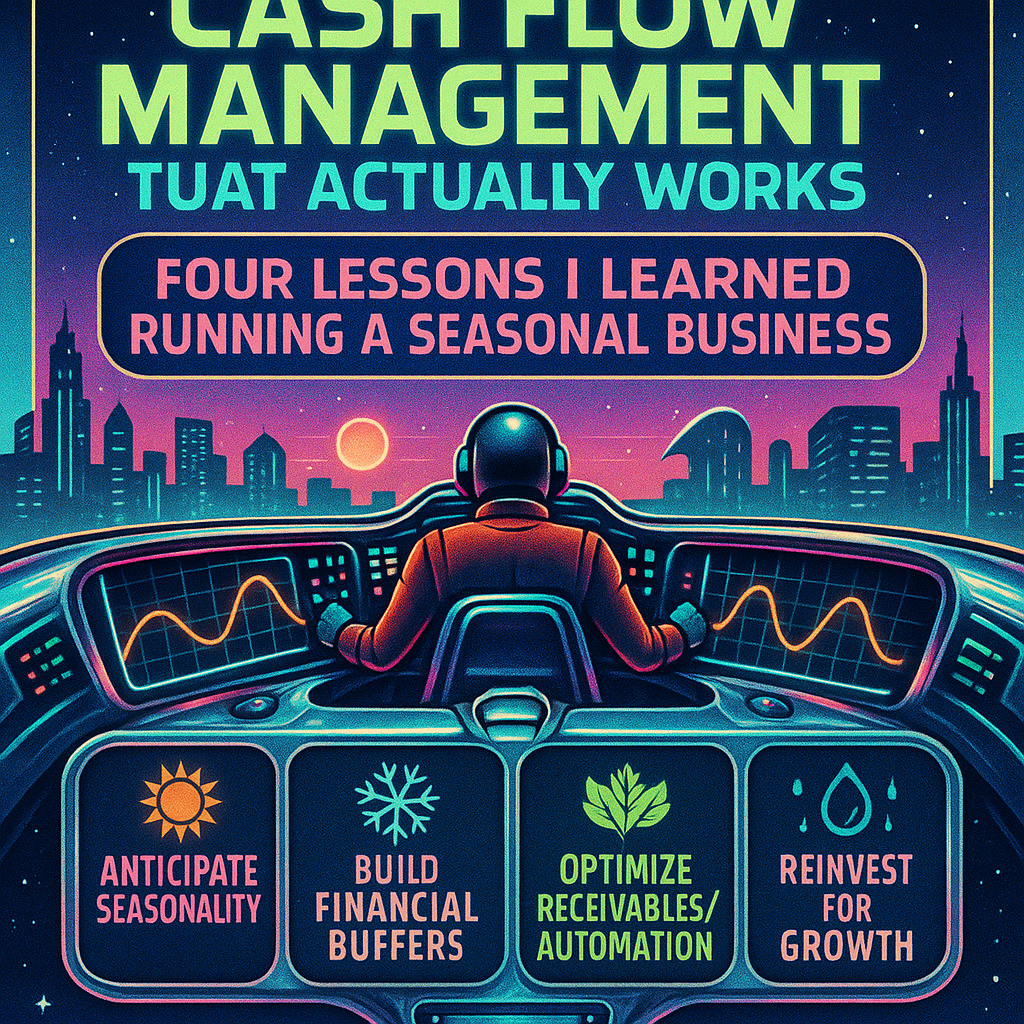
  • Cash flow management that actually works: four lessons I learned running a seasonal business

    Cash flow management that actually works: four lessons I learned running a seasonal business

    Cash flow management that actually works: four lessons I learned running a seasonal business

    I learned the hard way that cash flow management is not a spreadsheet exercise. Early in my career I ran a small manufacturing business that made garden furniture. Sales boomed in spring and collapsed in late fall. One winter we had invoices piling up, a supplier holding shipments, and a payroll I could not meet. That crisis taught me five simple, repeatable practices that turn unpredictable months into predictable ones.

    Below I lay out pragmatic steps client advisory providers, accountants, bookkeepers, and business coaches can use right away with their clients to stop panic and build steady working capital.

    Diagnose the real cash problem, not the symptom

    When a client says “we have a cash flow problem,” ask three precise questions: where is cash leaving the business, when does it arrive, and what has to be paid on fixed dates. Most owners answer with generalities. Get dates and amounts.

    Run a 13-week cash forecast for the next quarter. Track inflows by expected deposit date and tag uncertain receipts. Reconcile that forecast to open AR aging and upcoming bills. If weekly projections differ materially from month-end reports, the business lives by timing, not by monthly totals.

    This short diagnostic turns vague worry into clear priorities. You will quickly see whether the true issue is slow collections, excessive inventory, seasonal sales timing, or a one-off liability.

    Tighten collections and make payments predictable

    Speeding collections raises cash faster than cutting costs. Start with three operational changes you can implement in two weeks. First, require clearer payment terms on invoices and enforce them. Second, offer one or two simple incentives for early payment and one non‑punitive penalty for late payment. Third, automate reminders and allocate a staff member or outsourced resource to follow up the day after an invoice becomes overdue.

    On the payables side, negotiate staggered payments with key suppliers. Suppliers prefer predictability. A proposal that replaces a surprise late payment with a modest short-term plan wins far more often than a demand for immediate full payment.

    These moves reduce the float between when you earn and when you receive cash. That gap is where most seasonal businesses fail.

    Reprice and protect margins when volumes swing

    Seasonality changes unit economics. A low-volume month that uses the same fixed overhead will quickly erode margin. Review pricing and minimum order policies before the season changes. Build simple guardrails: a floor price for low-volume jobs, and a surcharge for rush requests or extended credit terms.

    Use small experiments to test client elasticity. Price increases delivered alongside transparent explanations about supply costs or extended payment terms land better than mysterious raises. When possible, reallocate costs from fixed overhead to variable costs that move with volume.

    If cash is tight because inventory sits unsold, apply triage. Classify stock into fast, slow, and obsolete. Move slow stock via promotion, bundle, or resale channels. Recovering cash from inventory is often faster and less damaging than additional borrowing.

    Forecast scenarios and build a seasonal playbook

    Create three scenarios for the next 12 months: best, base, and worst. Each scenario must include revenue by month, required payroll, supplier commitments, and a borrowing plan. Use the scenarios to test triggers: for example, if receipts fall 10% in April, postpone nonessential hires and open a line of credit.

    A seasonal playbook turns reactive decisions into rehearsed responses. It should say who calls suppliers, how to tighten credit, and when to request owner injections. Put these steps in writing and run a tabletop exercise each quarter so the team knows their role before a crunch arrives.

    For teams advising multiple businesses, create a template playbook that adapts to client size and seasonality. The template becomes a deliverable you can use across clients to accelerate implementation and coaching.

    Midway through the planning process, consider whether a client needs a different cash management structure. For some, a separate account to hold seasonal reserves works. For others, a predictable short-term line that they only tap during off months fits better. You can find useful frameworks on improving liquidity and operational resilience in external leadership resources such as leadership. When teaching these frameworks, emphasize decisions and responsibilities over dashboards.

    Reframe client conversations: stop apologizing, start advising

    Owners often lead with excuses. That invites negotiation and erosion of terms. Instead, teach clients to lead billing conversations with data. A script that states expected dates, recent payment history, and a concrete next step reduces ambiguity and improves outcomes.

    Help clients build a short briefing pack for key customers. The pack shows projected delivery dates, payment timelines, and how the supplier partnership benefits the customer. That transparency reduces friction around pricing changes and payment schedules.

    When difficult conversations are needed, coach clients to use two truths and a clear option: state the problem, give one data point, and offer a single, fair proposal. This structure shortens negotiations and often secures better payment behavior.

    A closing practical insight

    Cash flow management succeeds when teams treat timing as a core operational discipline. Regular, small improvements compound. A tighter collections cadence, a simple seasonal playbook, and clear payment conversations prevent the next crisis before it starts.

    When you work with clients, start with the 13-week forecast and the three scenarios. Those tools expose the levers that matter. Then push for disciplined follow-through. Over time you will move clients from fearful firefighting to predictable operations.

    If a client needs to build a habit around reserves and forecasting, refer them to straightforward resources on managing liquidity and behavioral change. For specific guidance on improving seasonal working capital, explore practical content on cash flow. It is the steady practice of these basic steps that keeps businesses solvent and able to invest when opportunity arrives.

  • How to Fix Cash Flow Forecasting Conversations Before Month-End Chaos

    How to Fix Cash Flow Forecasting Conversations Before Month-End Chaos

    How to Fix Cash Flow Forecasting Conversations Before Month-End Chaos

    I sat in a cramped conference room while a client rattled through numbers and excuses. Payroll looked fine on paper, but a supplier hold, a late receivable, and an unplanned tax bill had turned next month into a betting game. I opened a spreadsheet and asked a single question: “What would change if you had a 90-day line of sight on cash?” That question shifted the room from defense to planning.

    Cash flow forecasting is the single discipline that turns reactive chaos into predictable decisions. For client advisory service providers, accountants, bookkeepers, and business coaches, the way you frame forecasting conversations decides whether owners act or hide behind numbers.

    Start with a driver-based forecast, not a balance sheet

    Most small-business forecasts copy last month and drift. Instead, build forecasts around operational drivers: sales cadence, invoice terms, payroll cycles, inventory lead times, and one-off payments. Drivers create moveable levers you can discuss in plain language.

    Ask clients to show the assumptions, not the totals. Ask: which customers pay late, which products need upfront inventory, and when do bonuses hit payroll? Those answers let you model cash timing, not just accounting outcomes.

    When you translate drivers into timing, owners see options. Stretching payment terms by seven days, moving a vendor to net-45, or accelerating two invoice deposits can change runway dramatically.

    Make scenarios simple and visceral

    Clients rarely act on a 100-line sensitized model. They act when they can picture consequences. Build three short scenarios: best case, expected, and stress case. Keep each scenario to the headline drivers and the net cash at key dates: 30, 60, and 90 days.

    Use one-page visuals. A small chart that shows the lowest bank balance across the 90 days tells a story faster than months of commentary. During reviews, narrate the chart: explain the timing of the low point, the cause, and two concrete fixes.

    Stress scenarios should be realistic. Swap in a late receivable from a large client or a delayed shipment. Owners respond better to plausible pain than to theoretical extremes.

    Convert forecasting into decision conversations

    Forecasts should end with decisions. For every variance from plan, ask: what will you do now? Will you defer spending, negotiate timing with a vendor, request a partial payment, or tap a short-term facility? Turn each forecast meeting into a decision register.

    Record agreed actions and owners in the same file as the forecast. At the next review, start by checking those actions first. This builds momentum. When owners see a previously risky month become manageable because they executed two small changes, trust in forecasting grows.

    This is also where your advisory value shows. A calm, options-focused conversation about working capital reframes cash as a management tool, not a problem to postpone. Consider how leadership choices about pay dates and approval thresholds influence outcomes beyond numbers.

    Use short, repeatable cadences and the right tools

    Forecasting is a cadence, not a project. Weekly 15- to 30-minute touchpoints during tight months beat monthly firefights. The goal of a short cadence is not to perfect the model. It is to surface changes in collections, pipeline, and commitments quickly.

    Match the tool to the task. A clean driver-based spreadsheet beats a complicated system that no one updates. Later, you can migrate to software that automates receivable aging and bank feeds. For now, focus on accuracy of assumptions and speed of updates.

    Keep the forecast visible to the leadership team. An updated weekly snapshot removes surprise and spreads shared responsibility for execution.

    Teach clients to treat cash like a limited resource

    Owners naturally prioritize revenue and growth. They often forget that cash behaves like oxygen: abundant until it is not. Teach clients to budget cash flows for key categories: payroll, supplier commitments, tax, and debt service.

    Frame cash planning as prioritization. When a new opportunity arrives, run it through the forecast. If it creates a short at day 45, discuss which current item to defer or how to fund it responsibly. This habit turns opportunism into intentional choice.

    When owners understand how small operational tweaks change the cash curve, they stop treating surprises as crises. They adopt a bias to plan.

    Clarity in communication prevents metric confusion

    Owners and finance teams often argue about which number matters. Is it profit, EBITDA, bank balance, or free cash? Decide the single cash metric you will use in the forecast and repeat it every meeting.

    For most small businesses, the operative metric is the projected end-of-period bank balance at the lowest point in the forecast window. Use that number to trigger agreed actions: when projected low < X, execute action A. This rule-based approach removes emotion.

    Also align language. Use “available cash” to mean bank balance minus committed payroll and vendor holds. Define terms once and keep them consistent.

    Closing: make forecasting a leadership habit, not a monthly chore

    Forecasting stops being useful when it is an annual ritual. Make it a leadership habit by linking driver-based forecasts to decisions, short cadences, and simple scenarios. When clients can see the effect of one invoice arriving five days earlier, they make choices differently.

    As advisors, your job is to make those choices easier to see. Frame conversations around timing, trade-offs, and ownership. Teach clients to treat cash forecasts as a living management tool. That shift turns month-end panic into a predictable part of running the business.

    When you leave the room after a forecasting review, the owner should know three things: the likely low point, two concrete options to improve it, and who owns each action. That clarity is the difference between reacting to a cash emergency and preventing one.

    For ideas on how leadership decisions influence everyday operations and team behavior, see this practical resource on leadership. For a quick primer on operational cash concepts and timing, explore this short guide to cash flow.

  • Cash Flow Management Lessons from a Year of Tight Margins

    Cash Flow Management Lessons from a Year of Tight Margins

    Cash Flow Management Lessons from a Year of Tight Margins

    I walked into a manufacturing client’s office on a Monday in January and found the owner staring at three bank statements. Sales looked fine. Profits were thin. The business had the inventory and the orders, but payroll was seven days away and the bank balance told a different story.

    That moment teaches a simple truth: cash flow management is not a spreadsheet exercise. It is a set of daily decisions that show up in supplier terms, invoicing cadence, and the tone of client conversations. For advisors who work with small and mid-sized businesses, turning that truth into repeatable practice separates advisory from bookkeeping.

    Diagnose before you prescribe: the three cash flow leaks to look for

    Too often we start with numbers and skip the story. Read the transactions, then ask where timing breaks down. In practice, three recurring leaks explain most shortfalls.

    Operational timing. Customers pay on their schedule. Suppliers expect payment on yours. When receipts and payables live in different months, a healthy profit can still produce a working capital crunch.

    Concentration risk. A single large client or a single supplier term can move the needle overnight. Understand the top five customers and the top five suppliers and stress test a 30 percent swing.

    Process latency. Invoicing delays, approval bottlenecks, and slow expense reporting turn cash into receivables. Small fixes to cycle time usually buy far more breathing room than expensive financing.

    Practical changes that reduce risk in 30 days

    The fastest wins focus on timing and behavior. They require low technical lift and a clear owner.

    Tighten the invoice loop. Move from weekly to daily invoicing where possible. Include a short, plain-payment policy on every invoice. Train the finance contact to call for overdue accounts the week after terms slip.

    Reprice contract terms. Ask for part payment up front on long jobs. Offer a modest discount for shorter payment terms. Frame this as mutual risk management so clients do not feel punished.

    Move cash owners closer to operations. Give one person responsibility for weekly cash forecasting and one clean KPI: days of cash cover. That person calls if the forecast drops below the agreed threshold.

    These steps change the rhythm of a business. Rhythm matters more than one-off fixes.

    Using forecasts to change conversations, not just reports

    Forecasts fail when they become art projects that nobody reads. Use them as conversation starters with owners and with vendors.

    Start with a simple weekly rolling forecast that shows receipts, disbursements, and the net cash balance for eight weeks. Update it each Monday and publish one line that matters: the projected low point.

    When that low point approaches, advise on three choices: shift receipts, delay noncritical spend, or secure bridging cash. Lay the options out with the costs and the timing. That way, the owner makes a deliberate trade instead of a panicked one.

    A good forecast changes the calendar of decisions. It moves emergency conversations from Friday to Tuesday so there is time to act.

    Pricing and margin moves that protect cash without hurting sales

    When cash is tight, many owners reflexively cut prices to win business. That often deepens the problem. Instead, find margin levers that preserve cash.

    Shorten payment terms instead of cutting price. A 2 percent price reduction for net 60 is usually worse than a small fee for net 15. Make payment terms part of the commercial conversation.

    Convert variable costs to true pass-throughs. If a subcontractor or freight cost fluctuates, bill it as a separate line item rather than embedding it into a firm price.

    Embed small milestone billing on long jobs. Milestones align cash flow to work completed so the business does not finance the whole job.

    These changes require clear client communication. Frame them as mutual protections that keep the supplier reliable and the buyer confident.

    Operational leadership that shifts behavior over time

    Sustained improvement in cash flow management depends on culture. Owners and advisors must treat cash like a shared performance metric.

    Run a monthly cash review with operations, sales, and finance in the room. Highlight the forecast, explain the variance to plan, and assign one small corrective step for each department.

    Use simple, meaningful metrics. Days sales outstanding matters. So does the percent of invoices issued within five days of delivery. Track the few things that move cash and act on them.

    If you want an outside lens on how leaders change behavior, explore practical writing about leadership. The ideas there helped one client replace firefighting with steady cadence.

    Midway through the year that client had a cash buffer equal to ten days of payroll. They did it with discipline and steady process change rather than cutting headcount.

    Financing as a tool, not a solution

    Financing can be the right move when it costs less than the risk of missed payroll or lost customers. Treat it as a tactical tool to smooth timing, not a permanent fix for structural mismatch.

    Compare financing options on three axes: cost, flexibility, and covenant burden. Short-term lines and invoice financing usually hit a different risk profile than term loans. Choose the right fit for the business cycle.

    When you do recommend external help, explain how the facility will change behavior. If a line reduces the pressure to invoice promptly, add a covenant that keeps the invoice cycle visible.

    If you prefer practical walkthroughs on cash topics, there are concise resources that explain trading decisions and timing trades around cash flow. Use those to help clients understand trade offs.

    Closing insight: trade cadence for margin and predictability

    Cash flow management is a discipline of cadence. Shorten the loops between delivery, invoicing, and collection. Make the forecast a living conversation. Treat financing as a tactical bridge, not a fix.

    As advisors you can change behavior by defining a few clear measures and enforcing them with steady cadence. When the owner sees the bank balance stop jumping around, they stop treating cash as a surprise. That is where advisory becomes consequential.

  • Cash flow forecasting that actually works: a field guide for advisors

    Cash flow forecasting that actually works: a field guide for advisors

    Cash flow forecasting that actually works: a field guide for advisors

    It started with a call at 8:12 a.m. from a client who’d just lost a major customer. Numbers on their P&L looked terrible, but what the owner wanted to know in that moment was simple: will payroll clear next Friday? That question is the whole point of cash flow forecasting.

    For client advisory service providers, accountants, bookkeepers, and business coaches, cash flow forecasting is not a spreadsheet exercise. It is a conversation tool that prevents panic and creates room for decisions. Done right, it turns a messy phone call into a tactical plan.

    Why most cash flow forecasts fail in practice

    Forecasts often fail because they try to be perfect instead of useful. Teams build complex multi-tab models with optimistic revenue drivers and then never update them. Or they treat forecasting as a compliance task and only run one static projection once a quarter.

    A forecast is only valuable when it changes behavior. If the output sits in a file and never prompts a staffing, pricing, or collections decision, it fails the client. The second failure mode is timing. Weekly cash problems demand weekly or daily views. Monthly forecasts miss cliffs.

    Build a forecasting rhythm that matches the business

    Start with cadence. Meet your client where their cash cycle lives. For service firms with weekly payroll, run a rolling 13-week forecast every week. For retail with daily sales swings, supplement with a short daily cash-balance watch.

    Keep the model minimal. Track three things: opening cash, committed outflows (payroll, rent, loan payments), and realistic inflows (past-due AR adjusted for collection behavior). Use actual bank balances as your single source of truth.

    Make assumptions explicit. Record the confidence level for each receivable line: 90% (contracted), 60% (in pipeline), 30% (speculative). That simple tagging lets the owner know which dollars are plan and which are hope.

    Turn forecasts into practical conversations

    A forecast produces two outputs: a current cash view and a set of decisions. Lead with decisions in meetings. Instead of saying “here’s next month’s balance,” say “if payroll is due on April 3 and receivables A and B arrive as expected, we need to do X by March 28.”

    Use scenario triggers. Define clear thresholds tied to actions. Example: if projected cash drops below two weeks of payroll, trigger deferred spend, expedited collections, or short-term financing conversations. These thresholds remove ambiguity and keep conversations operational.

    Practice blunt options. Present three short, concrete moves: conserve (delay discretionary spend), accelerate (push AR, offer small discounts for quick pay), or cover (bridge loan or factoring). Lay out time windows and consequences for each.

    Systems and processes that make forecasting reliable

    Automate data where you can. Link bank transactions and aging receivables to the forecast to reduce manual update time. But avoid over-automation that hides judgment. A human should review assumptions weekly.

    Standardize collection rules. Create a collections playbook with escalation steps and owner scripts. When a receivable crosses 30, 60, or 90 days, your forecast should automatically downgrade its probability and the team should follow the playbook.

    Give the owner an easy cash dashboard. One-line metrics work best: current bank balance, runway in weeks, next big cash event, and top three receivables at risk. Keep the dashboard accessible and in plain language.

    Embedding cash forecasting into client advisory services

    Make forecasting a subscription of value, not an add-on. Price it for the rhythm you deliver: weekly watch for fragile cash clients, monthly strategic forecasting for stable clients. Your value is the reduction in surprise and the speed of decisions.

    Use forecasts to expand advisory conversations. When runway stabilizes, shift to growth planning: pricing changes, hiring timing, and small capital investments. These are leverage moments where accurate forecasts create optionality.

    Respect constraints and coach on behavior. Many owners resist conservative forecasts because they fear looking small. Frame frank conversations around choices the numbers make visible. Good advisory combines empathy with clear limits.

    Midway through a client relationship, introduce a compact leadership reading list to help owners think beyond the spreadsheet. A short piece on leadership that emphasizes decision discipline can reframe how owners use forecast information and how they act under pressure.

    A practical mid-article checklist

    • Run a rolling 13-week forecast for eligible clients and update it weekly.
    • Tag inflows by probability and record the rationale for each tag.
    • Set two action thresholds tied to payroll and vendor obligations.
    • Create a one-page cash dashboard the owner can read in under two minutes.
    • Maintain a collections playbook and downgrade AR automatically as it ages.

    These items keep forecasting from being a one-off exercise and make it a living tool.

    Closing: what a forecast should leave behind

    The best forecasts do three things. They reduce anxiety by answering immediate operational questions. They force timely decisions by making trade-offs visible. They create optionality by showing when you can invest and when you must conserve.

    If you leave a client with one measure of success, make it this: runway in weeks. When a business can tell you today how many weeks it can operate under current commitments, you have moved forecasting from theory to practice. That clarity saves payroll, preserves supplier relationships, and opens the space for deliberate growth.

    When you pair that clarity with disciplined collections and a simple dashboard, you transform cash flow forecasting into a repeatable advisory product. And when you need to explain how cash forecasts unlock those choices, a plain conversation about cash flow gives owners a vocabulary they understand and a path they can follow.