How I Turned a Seasonal Cash Flow Forecasting Mess into a Predictable 13-Week Plan
When a local manufacturer called in a panic in late August, their payroll was two weeks away and receivables had stalled. They had revenue, but not the timing. I opened their books and found a common failure: the forecast existed as a hopeful spreadsheet, not an operational tool. That failing forced last-minute borrowing and bruised client trust.
This article shows how to move from hopeful numbers to a repeatable cash flow forecasting process you and your clients can rely on. I write from the field. These are fixes I used with real clients to stop surprise shortfalls and improve decision quality.
Why cash flow forecasting fails in small businesses
Most failures start with three predictable problems. First, people treat forecasts as reports rather than living plans. They update them once a quarter and then ignore them. Second, the forecast mixes wishful revenue timing with fixed expense timing. Third, no one owns the cadence. When owners and advisors assume someone else will chase invoices or delay payments, nothing happens.
You can see the consequences right away. Missed supplier discounts. Emergency lines of credit with high fees. Fractured relationships with employees. Those outcomes are avoidable when forecasting becomes an operational habit.
Build a 13-week forecast that runs itself
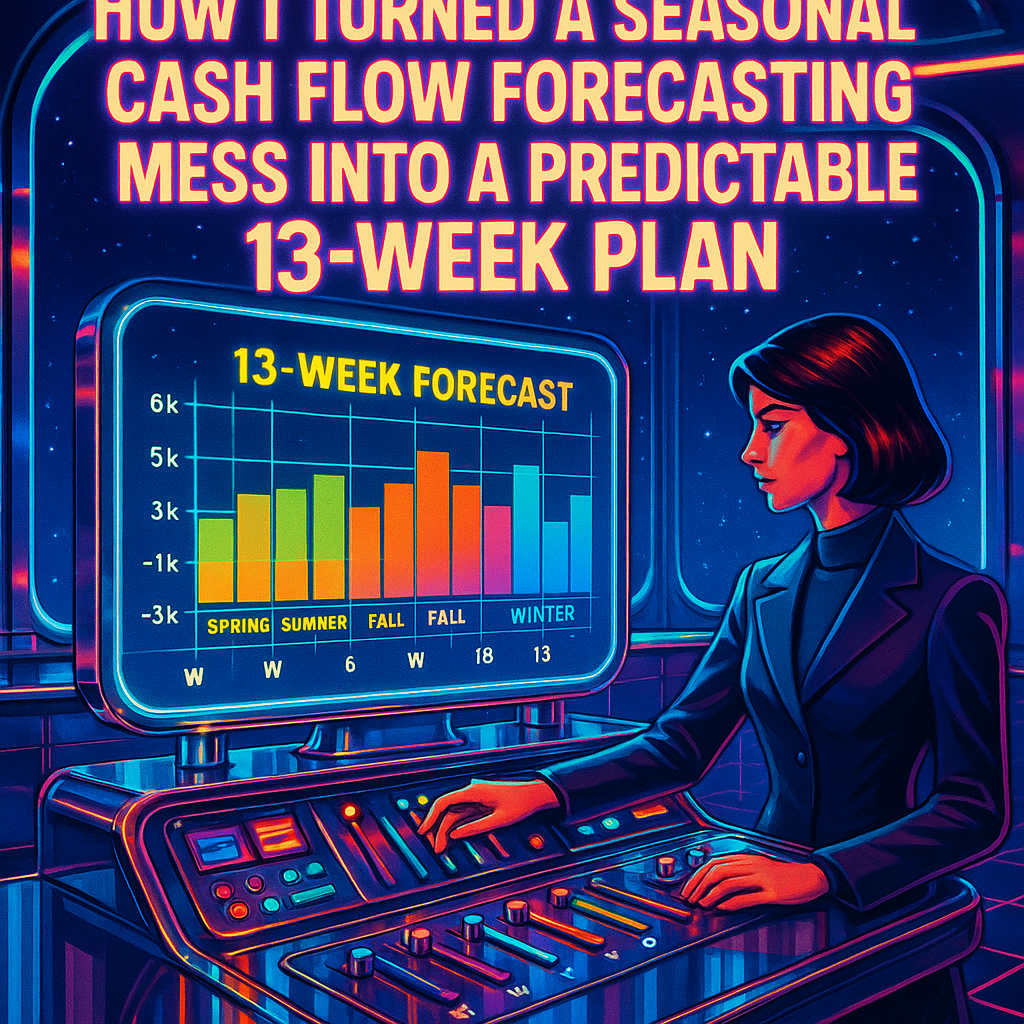
A rolling 13-week forecast forces short-term clarity. It reduces guesswork and makes gaps visible before they become crises.
Start with the right inputs. Use actual bank balances and cleared transactions for the starting point. Pull AR aging and AP aging into the model weekly. Break revenue into committed contracts, probable income, and prospective sales. Estimate timing, not just amounts.
Use rules, not promises. Convert vague client promises into probabilities and assign expected collect dates. For recurring items, automate entries. For nonrecurring items, capture the trigger that will move them into cash.
Set simple operational rules. Update the sheet every Friday. Reconcile cash to the bank feed. Assign an owner who posts adjustments and comments. When everyone treats the forecast like the operating plan, it stops being a document and becomes the control center.
Simple tactics that close short-term gaps
When the forecast shows a shortfall, respond with a prioritized set of tactics. Do the low-cost moves first.
- Tighten collections. Send one structured reminder the day an invoice becomes 7 days overdue. Call after 14 days. Ask for partial payments if needed. Document every attempt.
- Re-sequence payable dates. Ask vendors for 7-to-14-day extensions where possible. Offer a small fee or early-payment incentive to suppliers where that saves more than the fee.
- Use customer prepayments selectively. For projects with clear deliverables, ask for a deposit. Make the deposit the default on new contracts.
- Smooth payroll with short-term lines only when cheaper than late fees and morale costs. Treat borrowing as plan B, not a habit.
These tactics work best when you map their impact directly into the 13-week forecast. Seeing the dollars change in week three versus week six makes the tradeoffs obvious.
Have better client conversations about money and leadership
Advisors often avoid hard money conversations. That creates surprises. Instead, make those conversations routine and specific.
Lead with scenarios. Present a baseline, a downside, and an upside. Show the three-week actions you recommend under each scenario. When you frame choices as discrete steps, business owners can decide without paralysis.
Use language that reduces shame. Say, "Here are three practical moves we can take this week to protect payroll." This keeps the focus on actions. It makes the owner the decision maker and you the operational guide.
When teams need cultural change around collections or payments, good leadership matters. Coaches and advisors who model consistent follow-up and accountability change client behavior faster than any software.
Make the forecast actionable with two dashboards
Two simple dashboards keep the forecast usable. One shows weekly ending cash for the next 13 weeks. The other tracks gap-closing actions and their owners.
The cash dashboard stays strictly financial. Show starting cash, inflows by category, outflows by category, and weekly ending balance. Keep it visual. Color-code cushion weeks and alert weeks.
The action dashboard lists who will call which customer, which invoices to delay, and which vendor negotiation is in flight. Update this dashboard in the same weekly meeting where you refresh the numbers.
If you want a mid-article reference for frameworks that teach practical cash handling and client-facing techniques, a compact resource on cash flow examples and tactics can be useful to share with teams.
Closing insight: forecast the conversation, not just the numbers
The technical steps matter. The mechanics of a 13-week forecast, the AR/AP plays, and the dashboards deliver control. They reduce emergency borrowing and preserve relationships.
The cultural piece matters more. Make the forecast the center of a weekly decision routine. Assign owners. Track commitments. Practice the tough conversations with scripts that keep tone neutral and action-focused. When forecasting becomes a habit, businesses become predictable.
Predictability creates options. Advisors give owners breathing room to invest in growth rather than firefight the next payroll. That is the real value of disciplined cash flow forecasting.
If you leave with one thing, make it this: forecast the conversation as deliberately as you forecast receipts and payments. When you do that, the numbers start to behave differently.